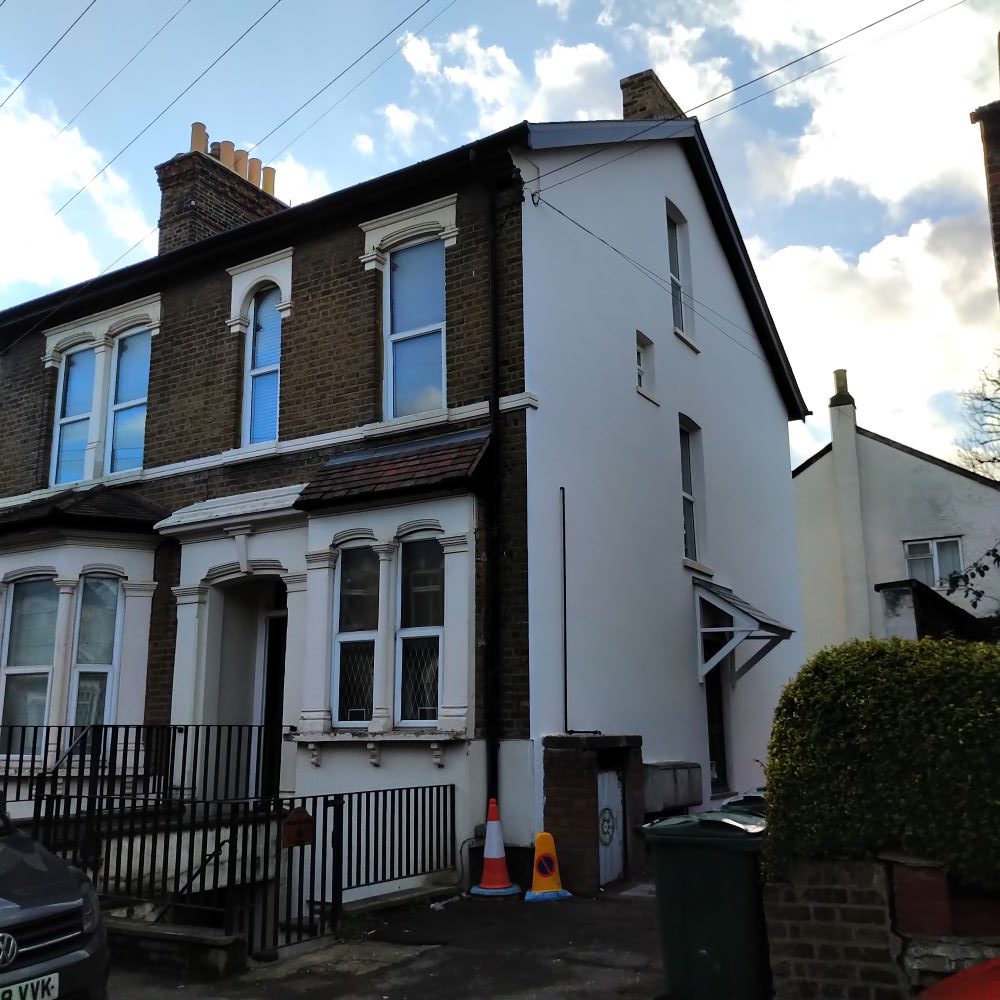
When it comes to protecting your property’s external walls, the overhang plays a crucial yet often underappreciated role.
The overhang is the section of the roof that extends beyond the property’s outer walls. However, overhangs are not just a part of the roof. You can have them on side walls, around porches and above windows.
While it may appear to be simply an architectural feature, its importance is highly practical—especially for external rendering.
The primary function of the overhang is to protect the walls from direct exposure to rain and moisture. By extending outwards, the overhang ensures that rainwater falls away from the walls rather than streaming directly down their surface. This is vital for external rendering, as consistent exposure to water can lead to issues such as dampness, staining, or cracking over time.
For any rendered surface, minimizing moisture exposure is key to maintaining a durable and aesthetically pleasing finish.
The overhang acts as a shield, helping to prevent water ingress. By reducing the amount of water that comes into contact with the render, the overhang helps prevent common rendering issues, extending the lifespan of the finish. In short, a well-designed overhang is a critical component in protecting your property’s rendered walls.
 K Rend approved